Human beings have been connected with dance, a universal language, since the dawn of time. Dance has expressed different things in different eras. It keeps changing, just as the world around us does. In essence, it is a mirror of society’s life.
Dance as a human language
In traditional cultures, dance connected a person’s inner life with the outside world. People danced to express fear, joy and other emotions. Fear of natural forces, gods and spirits was particularly strong. People believed they could influence supernatural forces through dance, giving it religious and magical functions: warding off illness and death, or even healing. Through dance, they could ask the gods for a better life, for sunshine or rain.
Between body and spirit
Ancient sources and later interpretations attributed educational, cleansing and therapeutic significance to dance. Philosophical reflection sometimes saw it as a bridge between body and spirit.
The Middle Ages saw the expansion of the Christian Church and the gradual disappearance of dance from churches. In early Christianity, dance expressed worship of God and thanksgiving. Over time, ritual dancing became associated with pagan culture and magical rites, and the Church condemned it. This did not stop Europeans from creating many forms of dance: court dancing and folk dancing emerged.
At Renaissance courts, dance was a regular form of entertainment. Not only the aristocracy but monarchs themselves danced.
In the Baroque era, Louis XIV believed that dance played a leading role in people’s moral education. A lover of dance, he founded the Royal Academy of Dance in 1661, supporting the development of French ballet.
During the Enlightenment, dance was treated mainly as a means of expressing thoughts and ideas.
At the turn of the eighteenth and nineteenth centuries, during Romanticism, men gave way to women in dance. These changes were rooted in political, economic and cultural developments. Women became icons of the dance culture of that time.
The turn of the nineteenth and twentieth centuries brought economic, social and cultural revolution. Increasingly lost in an industrialised world, people felt a deep need to explore their identity. In the twentieth century, great dance reformers such as Isadora Duncan and Maurice Béjart focused largely on the relationship between body and psyche. Art therapy and dance and movement therapy also developed in the 1960s.
Modern life and the need for balance
Every era has left its mark on the art of dance. Modern civilisation is an age of constant change and transformation. Alongside achievements in science, technology, medicine, communication and everyday conveniences, it brings a profound ecological, moral and social crisis. Urbanisation advances, noise levels increase, and automation and excessive consumption spread. Today, immersed in virtual life, people can easily lose their way, surrounded by illusions and imagined ideals. Pressure to be the best can undermine self-worth. The pursuit of material possessions and luxury makes people work long hours, leaving little time for relationships or passions. I feel that we in the West have lost our way because we have neglected the spiritual aspect of our nature. We are too pragmatic and focused on the material world. We do not nourish our souls.
A journey to Brazil
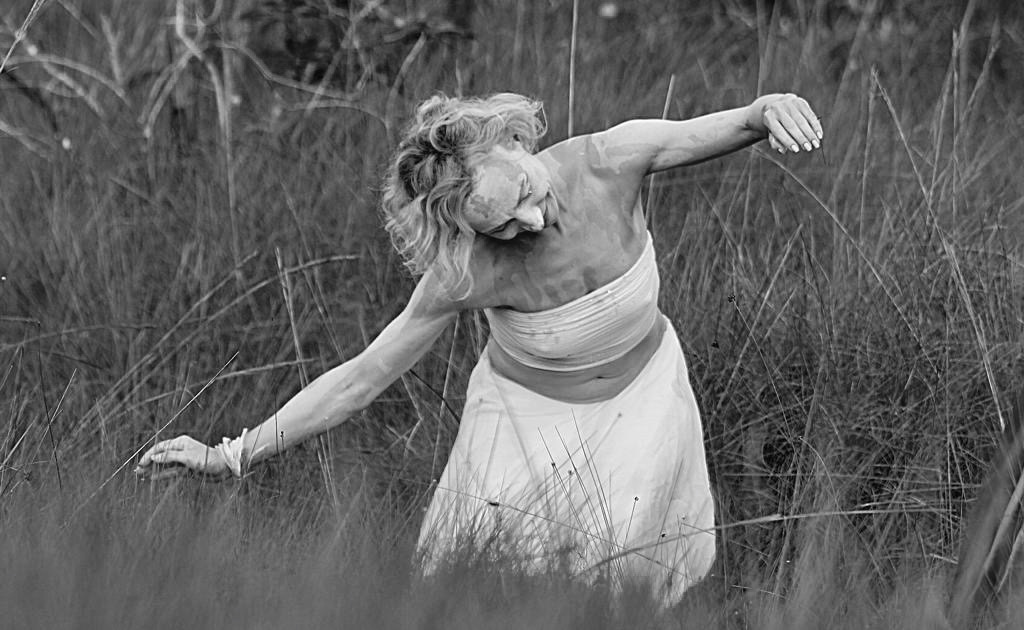
One of my journeys was an attempt to care for my spirit. I wanted to keep exploring the world and experiencing diverse cultures, so I decided to visit Brazil. From 25 February to 5 March 2020, I attended the Arroboboi dance workshop organised by Jahlyn Karuna. It took place on the farm Jahlyn created beside Chapada dos Veadeiros National Park in central Brazil. Chapada is a landscape of impressive waterfalls, crystal-clear rivers, rock formations and unforgettable views. For ten days, alongside dancers from around the world, I nourished my spirit. We inspired one another in a shared creative process, taking classes in different dance techniques, music, dance composition and improvisation. At the end, each participant performed a ritual dance honouring our highest potential in connection with nature, drawing inspiration and strength from it. Our solo performances took place in an extraordinary setting of grassy and shrubby savannah. We witnessed one another’s creations and artistic expressions, alongside the flora and fauna around us.
Returning to creativity
The workshop was a gift to each of us. We experienced creative energy through working with dance as an art form and with the heritage time has left us. It was an inward journey, full of inspiration and wonder.
In today’s stressful times, it matters that we deepen our relationship with nature and learn to remain in balance with ourselves through creativity.
Let us care for the soul. As Martha Graham said, dance is the hidden language of the soul.